Journeys as living artifacts.
A platform concept that replaces journey-map slide decks with versioned, annotated, queryable maps — built so every moment has metadata, owners, and a comment thread.
- Org
- Northwestern Mutual
- Role
- Design Operations lead
- Year
- 2022
- Discipline
- Platform concept
Journey maps go stale the day they ship.
The conventional journey map is a deck. It captures a moment in time, ships in a kickoff, and is dead on arrival — every team draws its own version, none of them are reconciled, and none of them survive contact with the next quarter's roadmap.
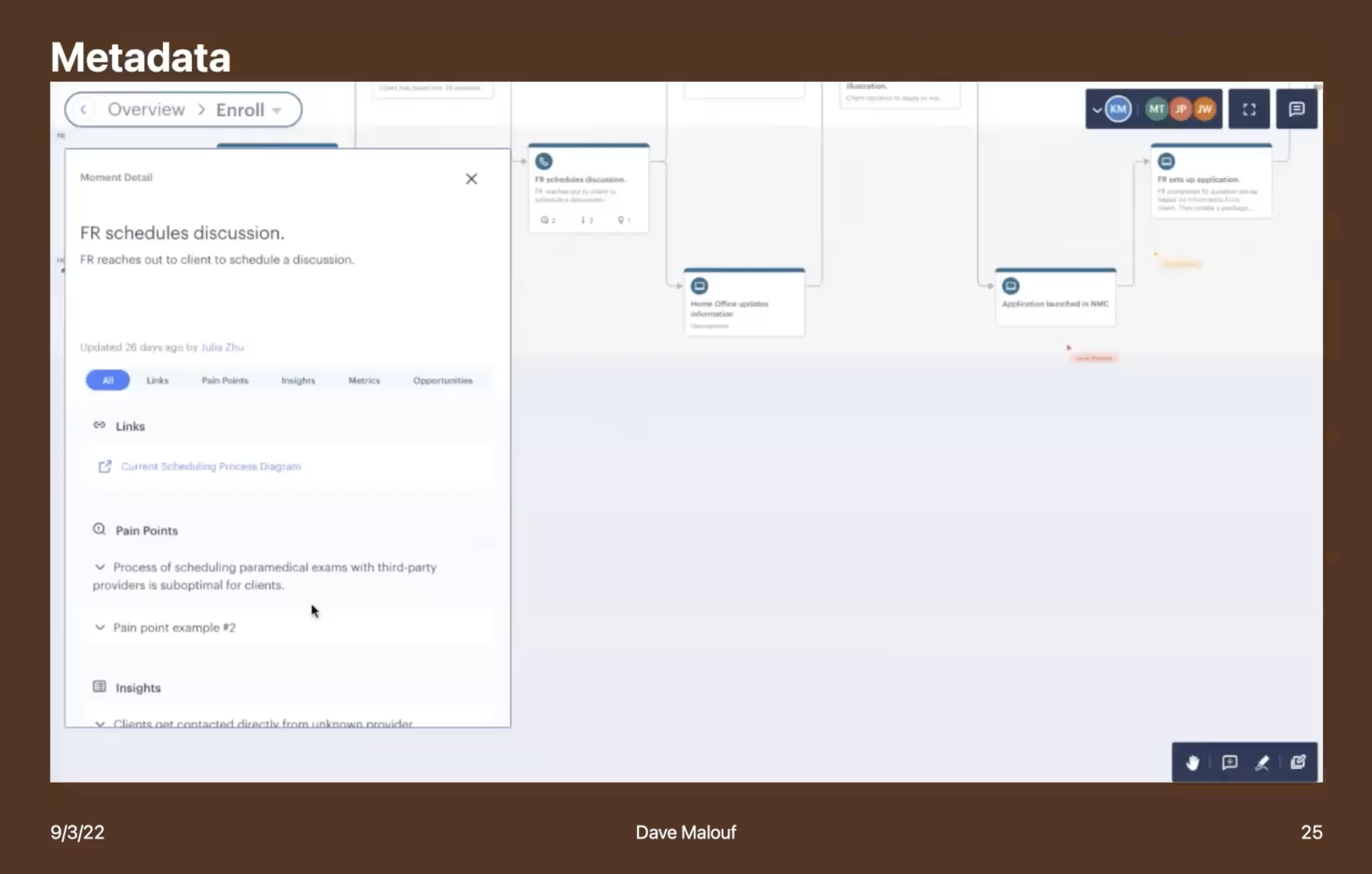
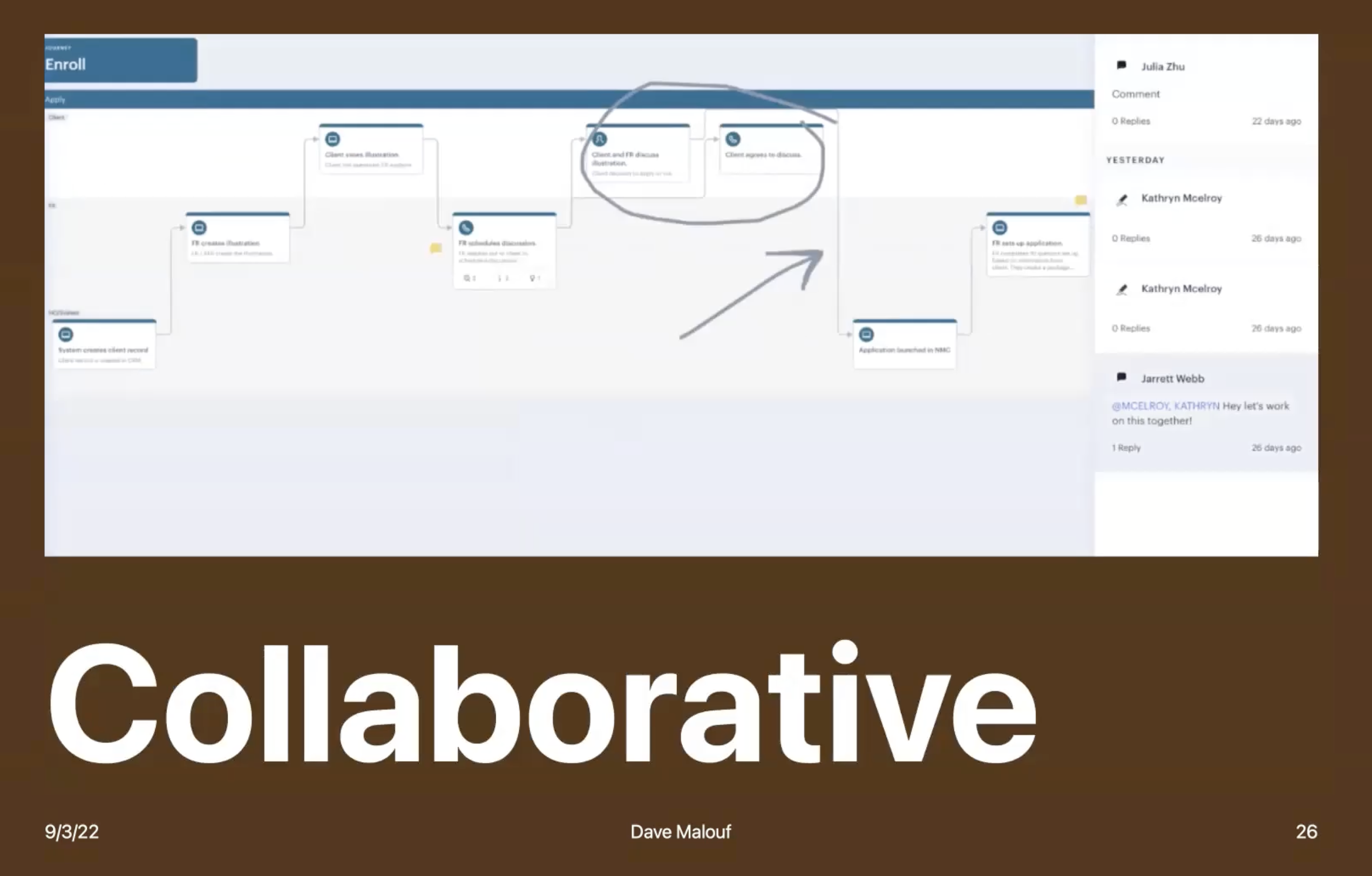
The platform below treats journeys as software: a parent-and-child structure with stable IDs, a moment as a first-class object with its own metadata, and collaboration as the default state rather than the exception.
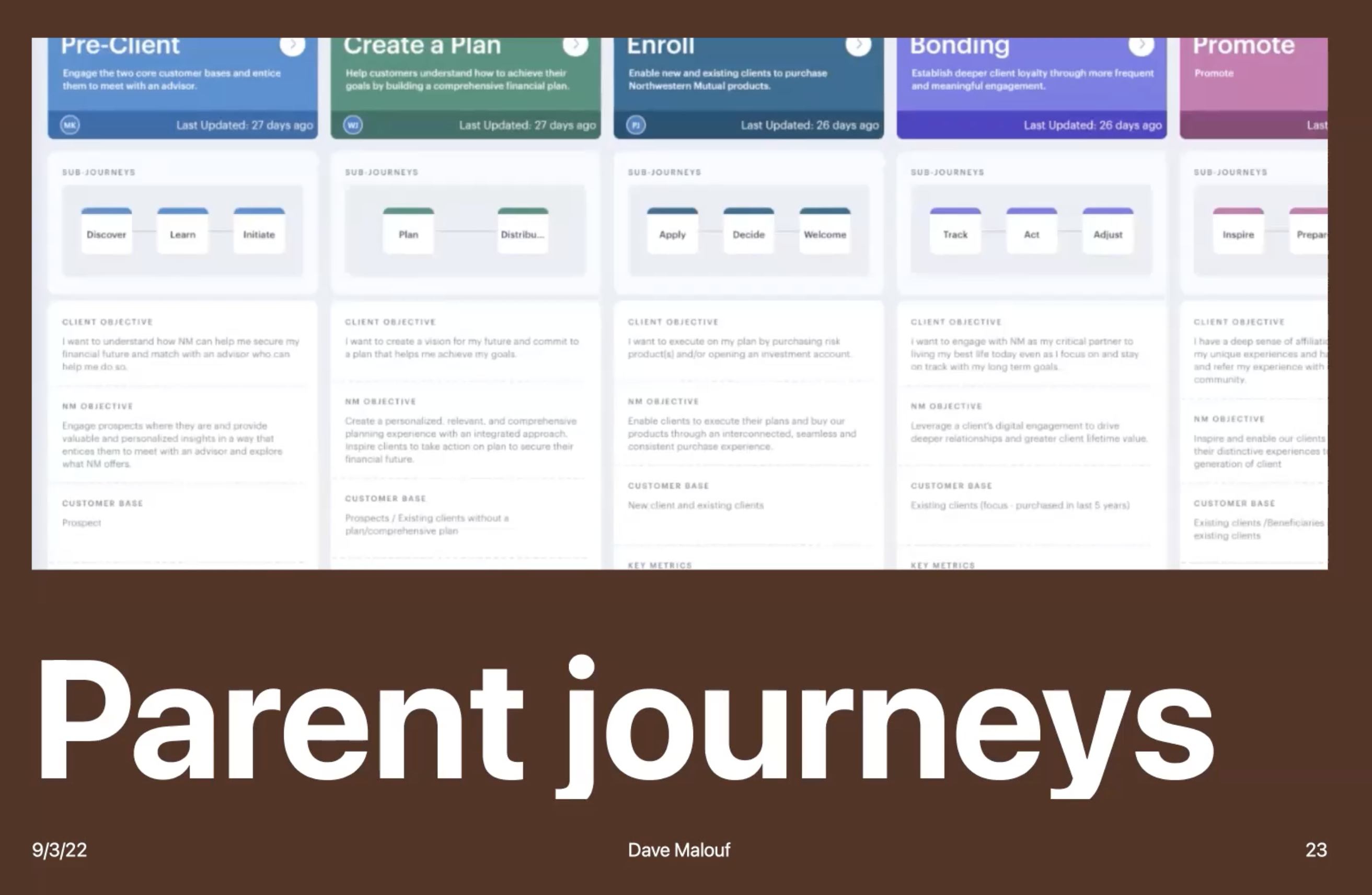
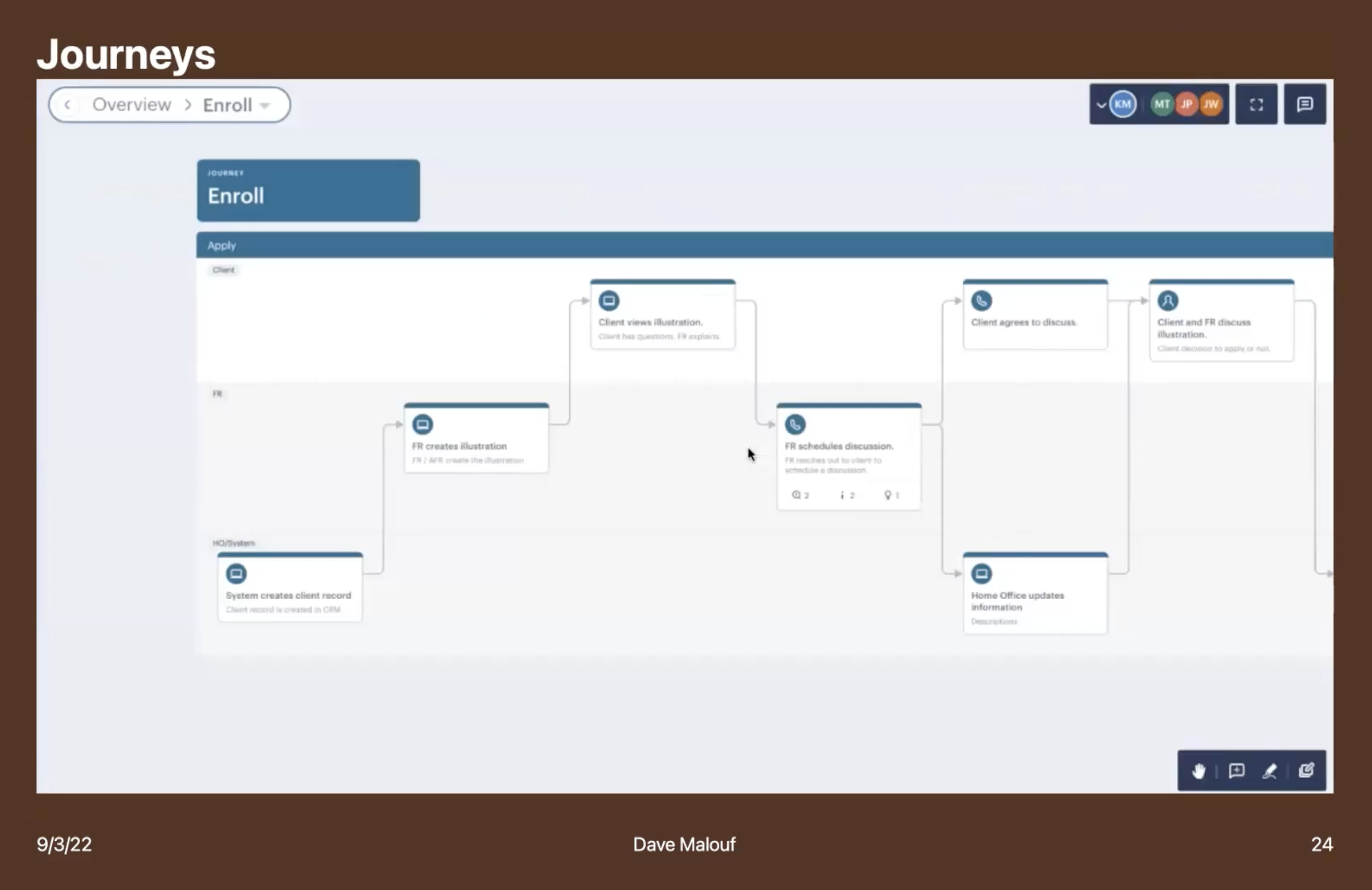
Journeys nest. A moment in one journey can reference a sub-journey. The org's experience becomes a queryable graph, not a slide deck.
Each moment carries links, pain points, insights, metrics, and opportunities. Research and analytics teams hang their work on the same object.
Every journey has a named owner, a last-updated timestamp, and a version. Decisions become traceable instead of disappearing.
From kickoff decks to platform infrastructure.
The platform reframed journey mapping from a workshop-and-deck activity into a piece of org infrastructure. Designers, researchers, analysts, and product managers anchor on the same objects; PMs cite moment IDs in PRDs; researchers attach studies to specific moments rather than dropping decks into a Confluence graveyard.
How this maps to leadership principles.
- Customer Obsession: journeys stop being a one-time deliverable and become the org's living model of customer experience.
- Think Big: platform infrastructure for an artifact most orgs treat as a kickoff slide.
- Bias for Action: researchers and designers act on the same versioned object, eliminating the 'send me the latest deck' lag.
- Deliver Results: PRDs that cite moment IDs ship features that reconnect to journey intent — across years, not just sprints.