Rackspace Managed Cloud Vision.
Leadership had a new strategy and no story. I pulled a cross-org team together for two days and we left with a vision film customers could feel — and roadmaps started to move.
- Org
- Rackspace
- Role
- Lead / Facilitator
- Year
- Managed Cloud era
- Discipline
- Vision storytelling
A strategy nobody could retell.
About two-thirds of the way into my tenure at Rackspace, the company went through a strategic change called "The Managed Cloud." Leadership was struggling to communicate how this new positioning changed what the organization does, what each of us does as individuals, and what new value it would carry for our customers.
To address it, I brought together a small team from across the organization — built entirely on relationships I'd made over the previous years. This group was open to being led, open to play, and open to telling stories, old and new.
Define what “managed” actually means.
The goal of the two-day gathering was to understand what makes up "managed" for our customers, and to build a story that combines those elements while addressing a core customer need our research team had recently surfaced. The organization's existing principles were put back on the table and explored as part of the same project.
Workshop.
We came up with a visual of what "Managed" means to Rackspace and to its customers. Then each person in the room told a story where one of those elements failed, and we deconstructed the stories to find the points of failure.
Based on those deconstructions, each person created a story that fixes the failure points while holding onto the main character and context lines of the original. One story rang true across a lot of our points and interests — so we dug into it and refined it, folding in aspects of the other stories we didn't want to lose.
Storyboarding.
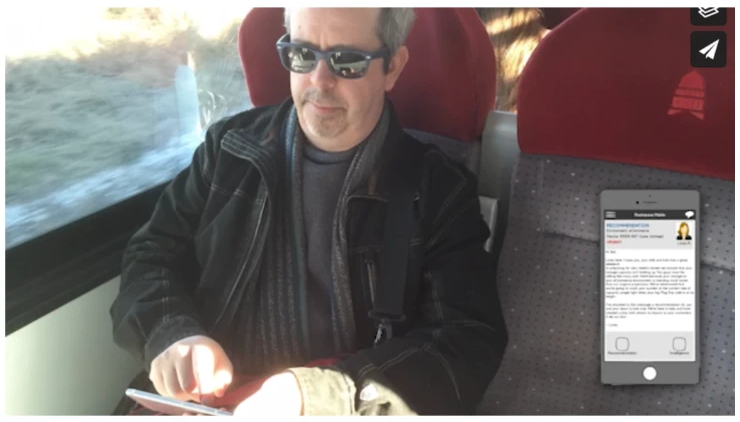
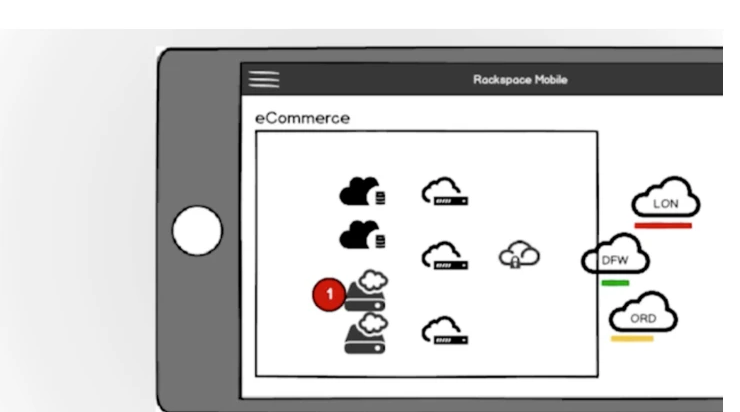
We created six-up comic-style boards of the story's plot lines, including thumbnail sketch wires of possible interfaces combined with quick sketches of context and the core personas involved.
Script, shoot, build.
Using Adobe Story, we converted the storyboard into a full production script with scene and set markers. The photo shoot ran in mostly one day, with finishers for edits as needed. A half-day covered voice-over recording and editing, and production was completed in Premiere and After Effects.
The team came from relationships across the company — no headcount, no budget line, just people willing to play.
Deconstructing stories where 'managed' broke gave us the real definition faster than any positioning doc.
Storyboard to script to shoot to edit in days — the artifact had to be something customers could feel.
Where it landed.
The vision was presented first to internal product teams, then to a group of customers in front of influential executives.
Customers gave the video story a rave review. And internally, teams started re-working their roadmaps based on the direction the video set.
How this maps to leadership principles.
- Customer Obsession: the definition of 'managed' came from customer failure moments, not from internal positioning language.
- Invent and Simplify: a two-day workshop replaced a stalled multi-month messaging effort.
- Earn Trust: a volunteer cross-org team shipped a produced film together because the process gave everyone authorship.
- Deliver Results: the story changed roadmaps — the clearest signal a vision artifact actually landed.